
Choosing the Right Gemstone for Jewellery

Choosing the Right Gemstone for Jewellery
Choosing a gemstone isn’t just about colour or pattern. The right stone for a piece of jewellery depends on how it will be worn, how it will be set, and how it will hold up over time.
Understanding these basics helps jewellers avoid cracked stones, unhappy customers, and designs that don’t age well.
____
Not All Gemstones Suit All Jewellery
One of the most common mistakes is assuming any gemstone can be used in any design. In reality, different stones behave very differently once they’re worn.
Before choosing a stone, it’s worth asking:
- Will this be worn daily or occasionally?
- Will it be exposed to impact or friction?
- Will it be set high or protected by metal?
The answers matter more than the stone’s appearance.
____
Best Gemstones for Rings
Rings experience the most wear. Stones used in rings should ideally be:
- harder
- structurally stable
- able to hold polish
Examples of stones that generally suit rings:
- agate and jasper varieties
- quartz-based stones
- chalcedony
Softer or more delicate stones can still be used in rings, but they are better suited to protected settings and occasional wear.
____
Best Gemstones for Pendants

Pendants experience far less impact, which makes them ideal for:
- softer stones
- highly patterned materials
- statement pieces
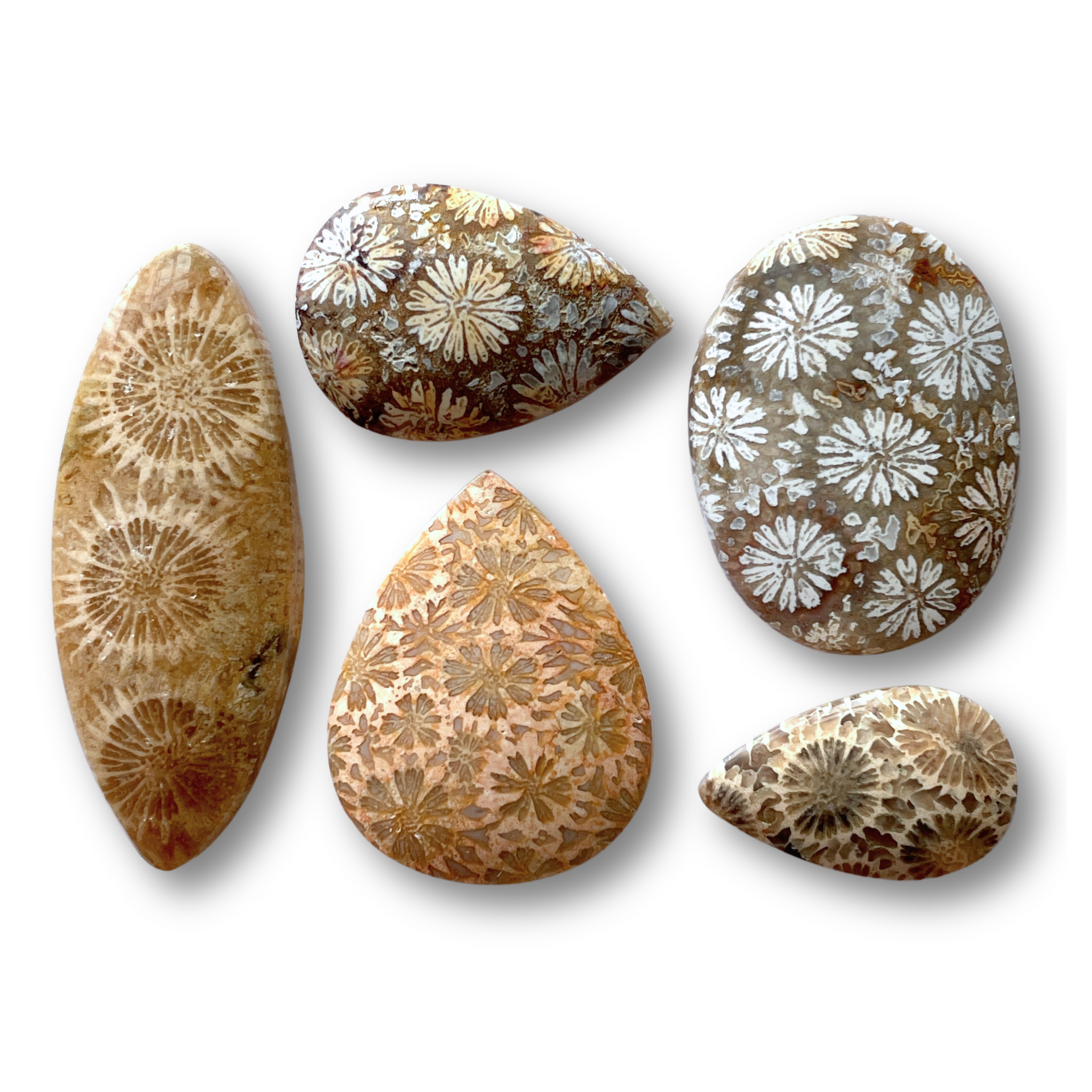
Pendants are a good choice for stones that might be risky in rings but are visually striking, such as:
This allows jewellers to use more expressive stones without compromising durability.
____
Best Gemstones for Earrings

Earrings are lightweight and low-impact, so stone choice is more flexible. The main considerations are:
- weight (for comfort)
- balance
- symmetry
Smaller cabochons or matched pairs work best for earrings, especially when the focus is on movement and wearability.
____
Hardness vs Wear: What Actually Matters
Hardness alone doesn’t tell the full story. A stone can be technically hard but still fragile if it contains internal fractures or weak edges.
More important than numbers on a scale is:
- structural integrity
- quality of the cut
- how the stone has been finished
Well-cut stones with strong edges often perform better than harder stones that are poorly shaped.
____
Pattern vs Placement
Highly patterned stones tend to work best when:
- used as a focal point
- given visual space
- not competing with other busy elements
Subtle stones are more versatile and suit layered or intricate designs.
Understanding this helps avoid designs that feel visually crowded or confusing.
____
Colour and Metal Choice
Some gemstones naturally pair better with certain metals.
As a general guide:
- cool-toned stones often suit silver and white metals
- warm stones pair well with gold and brass tones
This isn’t a rule, but it’s a useful starting point when planning cohesive designs.
____
Emotional Choice vs Practical Choice
It’s normal to choose stones because you love how they look. But good jewellery design balances emotional choice with practical thinking.
Asking simple questions helps:
- Will this suit everyday wear?
- Does this stone need protection?
- Is this a statement piece or a functional one?
The best pieces consider both beauty and behaviour.
____
Choosing Stones With Intention
The right gemstone supports the design rather than fighting it. When stones are chosen with intention, they:
- last longer
- set more smoothly
- result in happier customers
At Coffee + Gems, we hand-select stones not just for appearance, but for how they perform in real jewellery. Understanding stone behaviour is what turns a beautiful idea into a lasting piece.